A solar farm for every community
Lodestone is building a nationwide portfolio of utility-scale solar farms — delivering locally generated, renewable energy to the regions that stand to benefit the most.
Accelerating New Zealand towards a low-carbon future.
98% New Zealand owned and operated, and backed by some of Aotearoa’s most prominent investors. We develop, construct, and operate utility-scale solar farms from Northland to South Canterbury. Four farms are already generating 220 GWh of certified renewable energy a year, with two more farms under construction and more in planning. This is just the beginning.
Delivering for New Zealand
6
farms operational orunder construction
315GWh
projected annualgeneration
44k
can be poweredby our generation
98%
New Zealand ownedand operated
Right size. Right place. At pace.
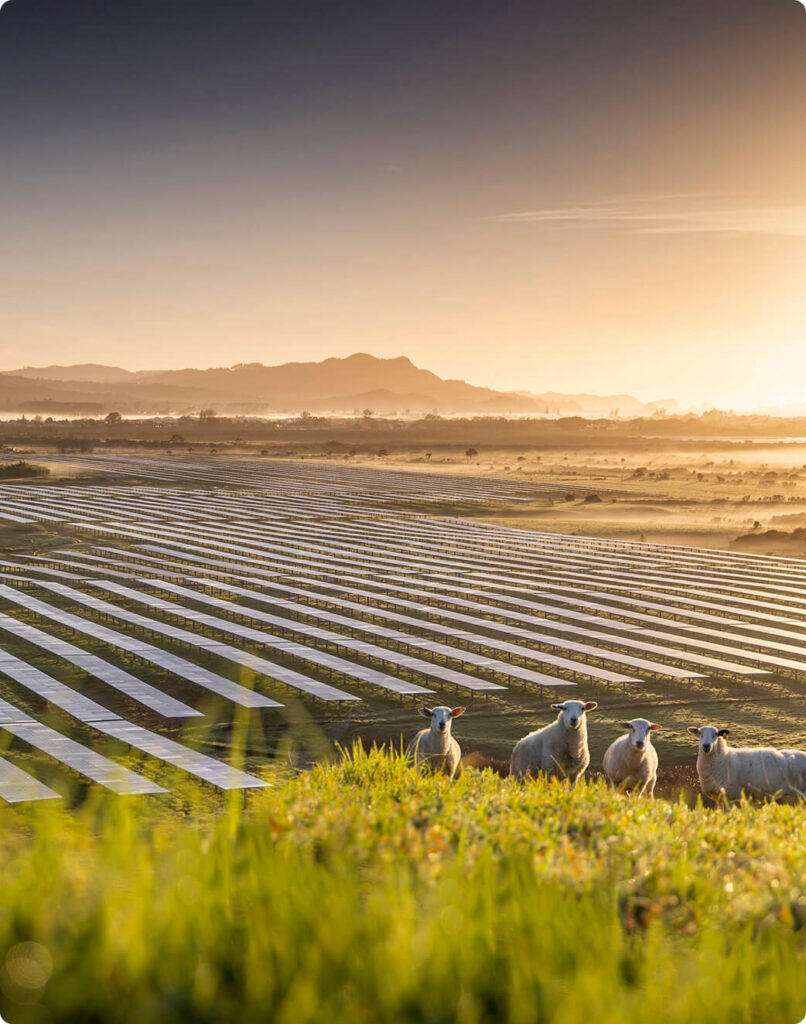
We don’t build the biggest farms, but rather the best-placed ones. Every site we develop reflects a deliberate choice about where solar will best deliver value for the local community and wider New Zealand.
Right size
A Lodestone farm generally sits on 40–60 hectares — small enough to sit in a rural back paddock, large enough to supply a town’s daytime power needs. We believe a 20–40MW farm is about right for most regions: quick to build, and sized to the community it serves.
Right place
We choose our sites carefully: high sunshine hours, proximity to an existing grid connection, and a flat land contour. Every farm includes native tree planting providing a mix of visual screening and supporting local biodiversity.
At pace
New Zealand is electrifying. Its forecast we will need 50-80% more electricity by 2050 and renewables is the way forward. Our diversified portfolio ensures we are always harnessing sunshine somewhere in Aotearoa.
What we do

Develop
We identify the right sites through rigorous solar, land and grid analysis. Iwi and community stakeholders are engaged from the start. Farms can be built on marginal land, converting unviable dairy blocks and diversifying landowners’ income. If you have land that may be suitable for a development, learn more here about our requirements.

Construct
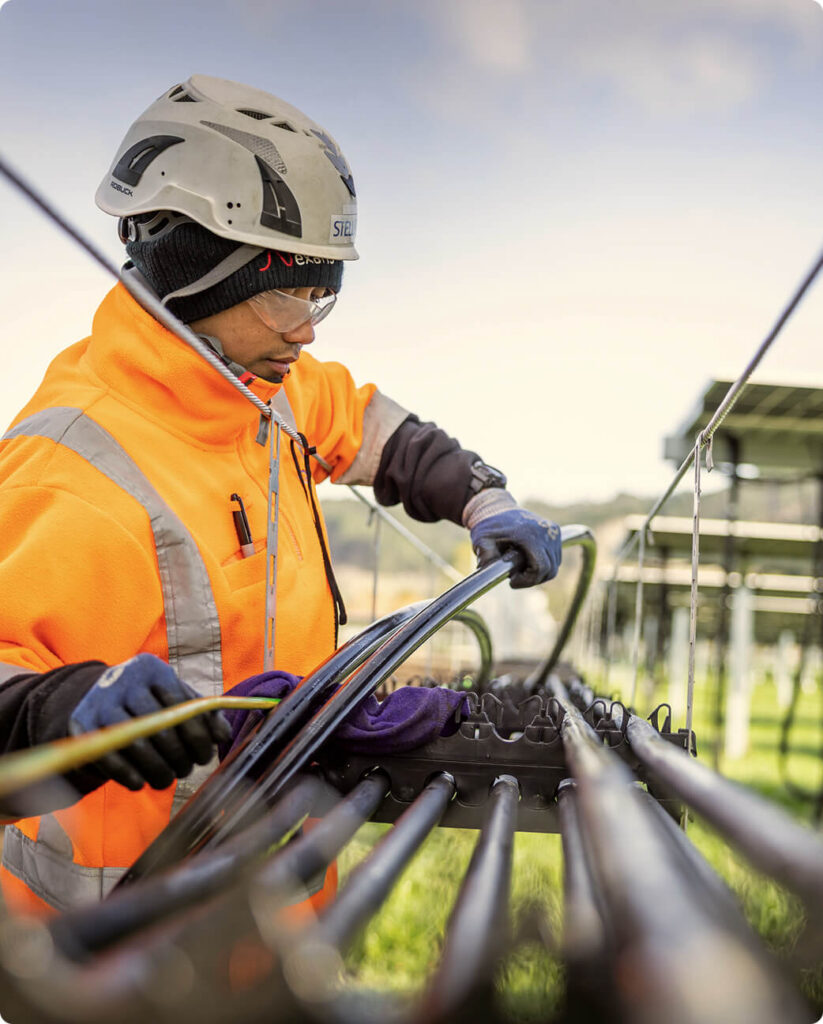
Low impact by design: using minimal concrete and minimal earthworks. Engineered to withstand natural disasters. Planted with natives to reduce visual impact and boost biodiversity. Creating local employment opportunities and building new skills in a prospering industry.

Operate
Once live, our farms operate emission-free for 30+ years. Bi-facial panels and single-axis trackers deliver 30–40% more output than rooftop solar. Agrivoltaic practices — like sheep grazing between arrays — keep land productive for farming too.
How we build
Agrivoltaics
Using global best practice, our solar farms continue to support traditional agricultural activities. Sheep are grazing at several of our farms, providing valuable vegetation management, while the panels provide shade and shelter from the harsh elements.Proven Technology
Lodestone's farms use bi-facial panels on single-axis trackers that follow the sun from east to west. Panels capture direct light from above and reflected light from the ground below, resulting in 30–40% more output than a fixed rooftop solar system of the same capacity.Environmental Design
Our farms sit quietly in the landscape. Native tree planting reduces visual impact and supports biodiversity. Construction is low-impact and operational farms it requires little water, makes no noise, and creates no emissions.Community & Iwi Partnership
Every farm is developed alongside the communities it will serve. Iwi are involved from the start, and play an important role providing cultural guidance, leading site blessings and contributing to the naming of farms.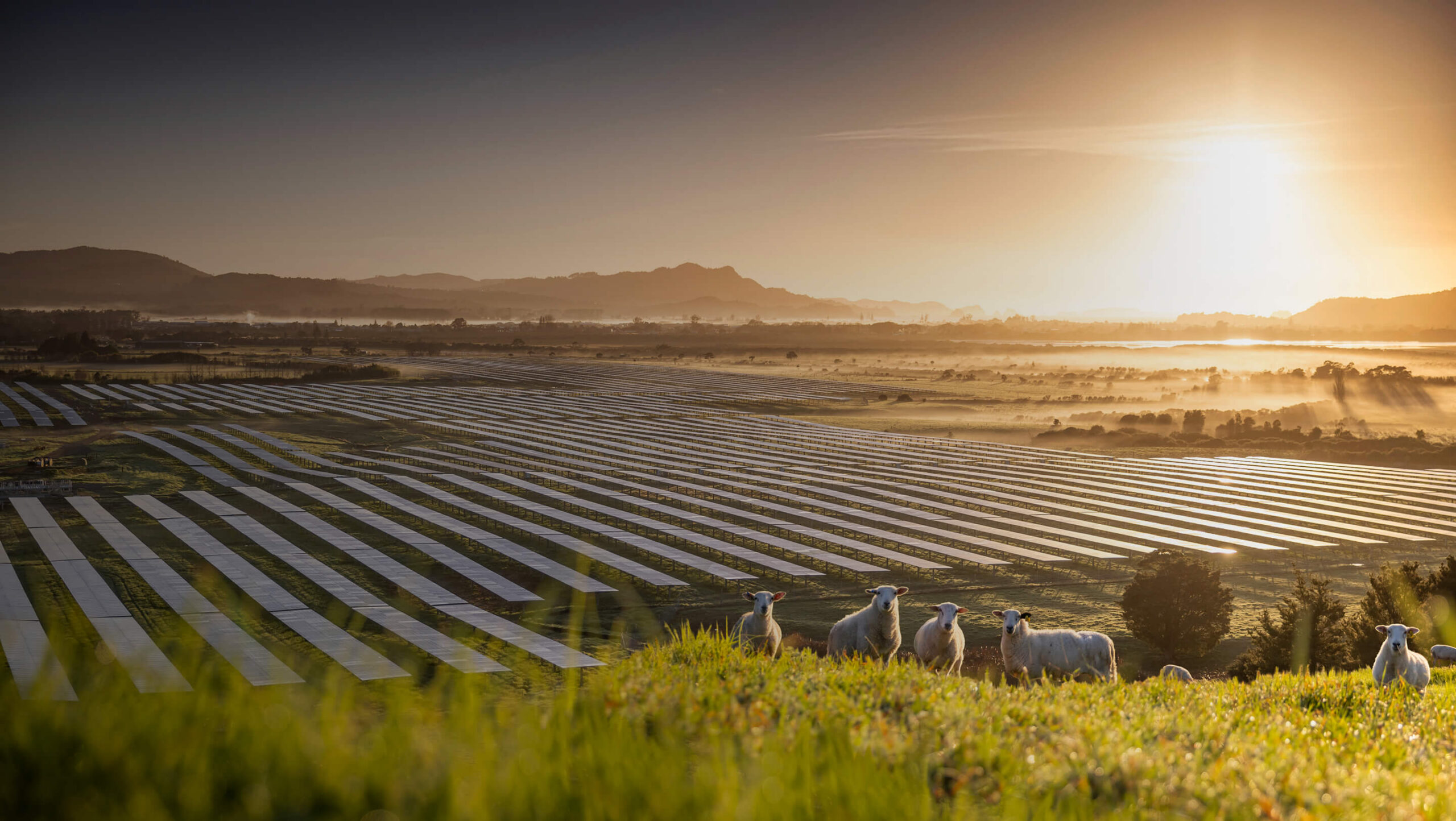
Help us build our solar farms
We’re interested in sites that are flat in contour, with a workable area greater than 40 hectares and in close range to a local transmission connection.
If you have potentially suitable land, that fits this criteria and you’re interested in selling or leasing, please complete our Land Assessment and a member of our team will provide feedback.
How solar is supporting New Zealand’s energy future.
As New Zealand transitions to an electrified economy, we need a diverse mix of renewable energy sources to meet growing electricity demand. Solar complements our existing hydro and wind by generating power during daylight hours, helping preserve hydro levels, especially in dry years.
Hydro functions like a battery, but depends on rainfall
Wind is a great resource, but can be variable
Solar supports daytime electricity demand
Diversified renewable generation improves system resilience

Community and iwi engagement
Our kaupapa is to be dedicated partners and collaborators with iwi in the areas we have farms. We are a company that aims to be part of the community we operate in and establishing good working partnerships with iwi is fundamental. Local people are employed on our construction projects with development and training provided. From the very beginning of our projects local iwi are consulted with including naming our farms and Kaumatua leading the blessings of our sites and projects.
Local communities will benefit from easier access to solar energy. Often, solar farm locations are near the end of a transmission system, making delivery costs and electricity prices high. New generation at the end of these lines will help provide a cheaper solution.
We’ve created a way for those who can’t otherwise harness the sun, to do so. For people without a roof, enough roof, or those under someone else’s roof, Lodestone can provide virtual rooftop solar power.
There will also be a range of employment opportunities available to local community members. For example, 40% of Lodestone’s Kaitaia site workforce is made up of locals during construction.
Lodestone Energy has big aspirations to keep harnessing the sun’s energy to power Aotearoa’s zero carbon future.
Our first projects cover five farms across the North Island, generating enough energy to power a city the size of Hamilton. But this is just the beginning. We’re always looking for flat or gently rolling land in rural areas to expand our solar farm network.
Solar farms distributed across regions will help to smooth intermittent generation and ensure a consistent portfolio of production. If you think you might have a suitable site for Lodestone Energy’s next solar farm, please get in touch with us to find out more.
Solar farm development
Lodestone Energy uses bi-facial panels and single axis trackers so our panels can follow the sun’s movement. This means we are 30% – 40% more productive than rooftop solar, resulting in significantly lower costs, higher efficiency, better utilisation of embedded carbon, and more energy generation. Because our farms are planned and constructed meticulously, they require about half the capital to build per megawatt than rooftop solar.
Our solar farms are very low impact construction projects, requiring minimal, concrete, water, earthworks, and heavy machinery for building. Manufacturing solar PV panels creates minimal emissions, as the manufacturing process is highly efficient. The carbon footprint of farm construction is minimal and similar to other forms of electricity generation.
Once operational, the farms will be emission free, helping to displace fossil fuel electricity generation across Aotearoa. Check out our Environmental Footprint section above for more detail.
Our solar farms are designed using a steel solar panel mounting structure that is motorised and will automatically adjust to track the sun during the day. We have on site wind monitors that automatically moves panels to an optimised stow position when high winds are detected. The system is designed to withstand greater than gale force winds.
Solar farm locations
Our bi-facial solar panels are sourced from the world’s premium suppliers. The dual-facing panels are largely powered by the sun facing surface, but they absorb light reflected from the ground too.
Our farms are designed to last a minimum of 30 years and remain operating at almost 80% of their original efficiency even at the end of that period. After that our solar panels will either find a second life somewhere new or be sold for recycling. There are already Australian companies that repurpose, recycle, or upcycle 97% of their panels.
Where possible, Lodestone will focus on repackaging panels for energy poor regions which can benefit from increased solar generation.
Our solar panels degrade very slowly – they’re made to soak up the sun all day. In just the last decade, innovative technology has significantly reduced efficiency loss. By year 10, we anticipate our farms to retain more than 95% of their year one power capabilities and 80% after 30 years.
China holds more than 80% of the global polysilicon market, 94% of the solar panel market and nearly 100% of the utility-grade solar market, so it is natural that New Zealand’s utility scale solar systems are supplied from China.
Social responsibility is a key criterion in our vendor selection process. We have carefully selected Trina Solar as our solar panel provider for the Phase 1 projects.
Trina is a tier 1 solar company, a major player in utility-grade solar systems manufacturing (including tracking mechanisms and battery systems) and is ranked amongst the top seven largest producers of solar panels in the world. In 2022, it shipped the equivalent of 14.5 GW of solar farm capacity worldwide.
Trina has regional headquarters in Zurich, Fremont (USA Silicon Valley), Miami, Tokyo, Singapore, and Dubai, supported by branch offices in Madrid, Mexico, Sydney, and Rome. They operate manufacturing facilities in China, USA, Thailand and Vietnam, with operating solar facilities in more than 160 countries.
Trina is a world leader in solar energy innovation and reliability and is committed to ensuring an ethical and sustainable supply chain.
At Lodestone, we build enduring relationships with suppliers who do things the right way.
Our due diligence of suppliers, including our solar panel suppliers, is meticulous and on-going and we explicitly contract for rights to terminate for any deviations to our principles.
We have enshrined these approaches in our Modern Slavery Policy which commits us to acting with integrity in all business dealings and to diligently avoid unethical sourcing in our supply chain. We are dedicated to acting expeditiously whenever we become aware of any violations to this policy framework. In addition, our Supplier Guiding Principles 2023 sets out our expectations of all our suppliers across social and environmental responsibility, supply chain, business integrity and disclosure.
We’re committed to respecting and supporting the dignity, well-being and human rights of our employees and all those who we engage with, or whose lives are impacted through our supply chain.